
Beyond the Tianjin Chronograph: The Story of Fenglei and Captain
July 5, 2026
Most enthusiasts are familiar with the early Tianjin chronograph—often, and incorrectly, referred to as the “Tianjin 1963”—and its countless modern reissues. Far fewer, however, know the remarkable story that followed. A few years after the original Tianjin project, production of China’s mechanical chronographs was transferred to Fenglei Instruments Factory, a military-run facility concealed in the mountains near Xi’an, in Shaanxi Province.
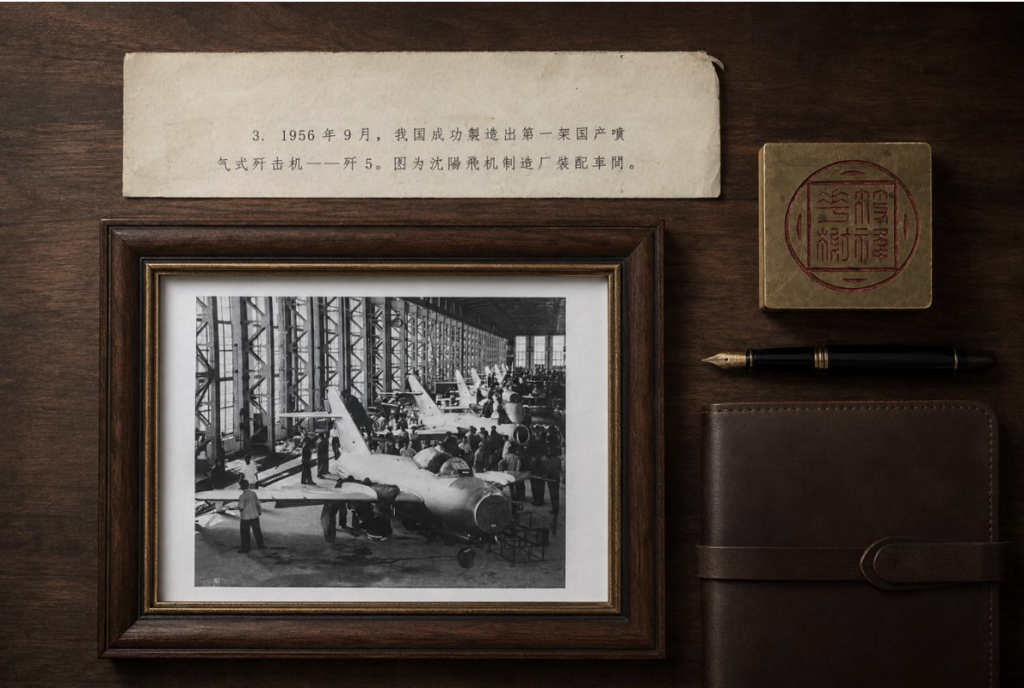
To understand Fenglei, one must first consider the broader context of China in the 1960s. During this period, the government launched large-scale industrial relocation programs that moved factories, engineers, and skilled workers from the vulnerable coastal regions into the country’s interior. The objective was both strategic and developmental: to strengthen national defense while accelerating industrialization in western China. Xi’an became one of the key centers of this movement.
Against this backdrop, Fenglei Instruments Factory (风雷仪表厂) was established in 1966. Its name, meaning “Wind and Thunder,” was fitting for a factory dedicated to producing precision instruments for both military and civilian applications. In 1969, the factory entered horological history by beginning the production of wristwatches and developing a mechanical chronograph intended for military use.
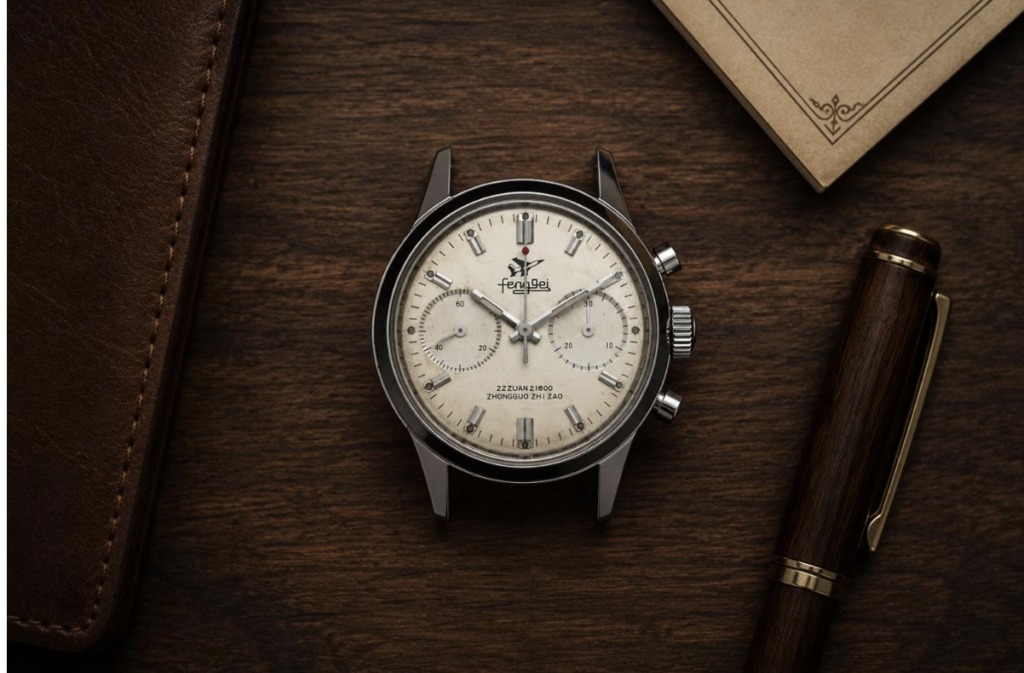
An often-overlooked detail is that the Fenglei chronograph was not developed entirely in isolation. To facilitate the transfer of technical expertise, several prototype Shanghai 304 chronographs were reportedly sent from Shanghai to Xi’an, accompanied by some of the most skilled watchmakers from the Shanghai Watch Factory. These watches served as reference pieces and helped transfer both manufacturing knowledge and practical experience to the Fenglei team. The Shanghai 304 itself has attained an almost mythical status among collectors. Fewer than half a dozen prototypes are believed to have been produced, making it arguably one of the rarest and most unobtainable watches in the entire history of Chinese horology.

The movement powering the Fenglei chronograph occupies a special place in Chinese watchmaking history. Derived from the original Tianjin chronograph project, it represents China’s first fully self-developed mechanical chronograph movement. At a time when much of the domestic watch industry was still establishing its capabilities, the successful development and production of an integrated mechanical chronograph was an extraordinary technical achievement and remains one of the crowning accomplishments of early Chinese horology.
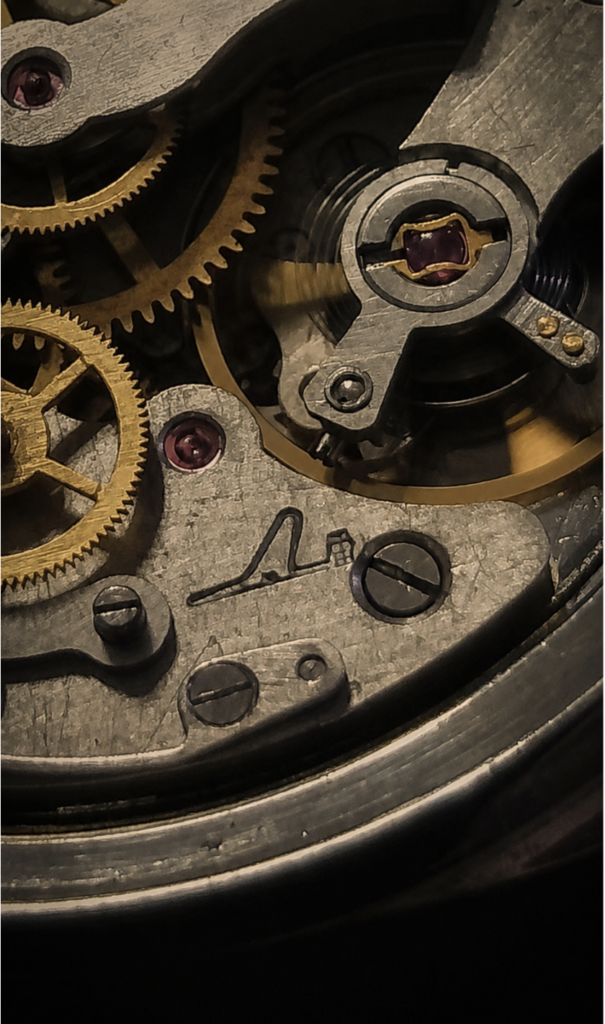
Only around seventy military-grade Fenglei chronographs were produced during the trial run. For reasons that remain somewhat unclear, the project was abruptly halted before full-scale military production could begin. In the late 1980s, production was revived for the civilian market, and the watches were reintroduced under the brand name Captain (卡顿).
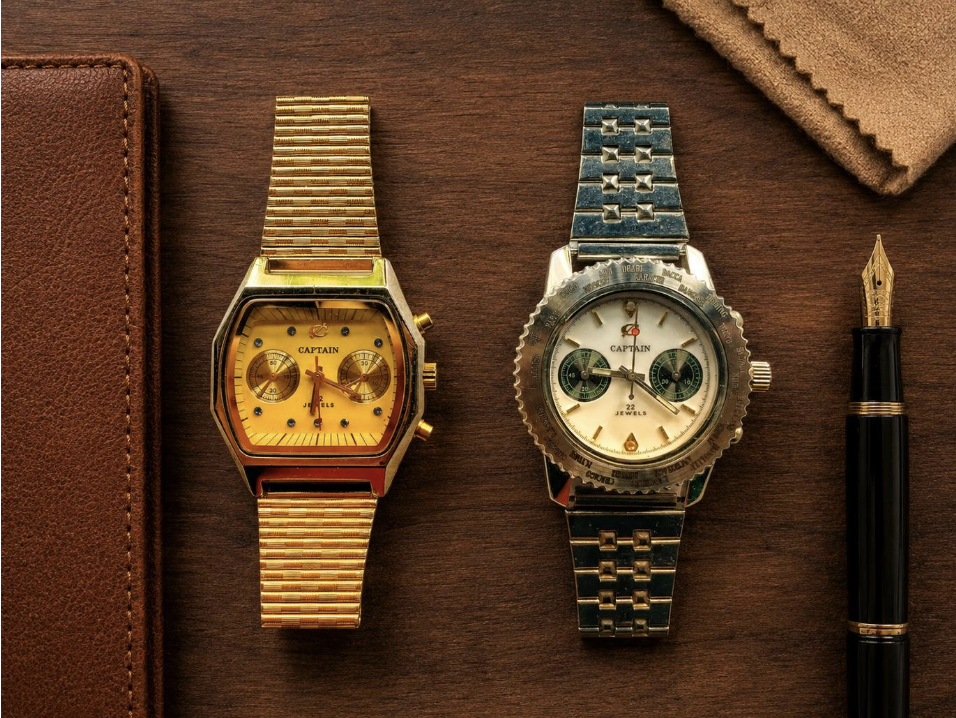
Even then, production remained modest. Estimates suggest that only around 1,500 to 2,000 Captain chronographs were ever made. In contrast to the numerous “1963” reissues available today, original Fenglei and Captain chronographs—particularly the military Fenglei models—occupy a highly esteemed position among collectors. They are genuine survivors from a pivotal chapter in Chinese industrial and horological history, bridging military ambition, national industrial policy, and the emergence of China’s own high-grade mechanical watchmaking capabilities.
Today, examples in original condition are extraordinarily difficult to find, especially new old stock (NOS) pieces. They are more than merely rare watches; they are tangible artifacts of China’s industrial heritage and among the most elusive mechanical chronographs ever produced in the country.
Hi, this is a comment.
To get started with moderating, editing, and deleting comments, please visit the Comments screen in the dashboard.
Commenter avatars come from Gravatar.